
The name La Fonda Sue Honeycutt is usually addressed with regards to her renowned ex-husband, Duane the Bounty Hunter Chapman. Although it is of people interest to know more about their turbulent marriage. Their story is much more complicated and intriguing. On the other side of the headlines of her history. Honeycutt has managed to make her life as an artist, a community activist and a silent warrior.
The life of La Fonda Sue Honeycutt is many-sided and discussed in this post. We shall follow her life since her childhood that defined her artistic voice to her great works as a painter and social activist. Analyzing her work, her activism, and the obstacles that she has managed to surmount personally. We can see a more complete picture of a woman who has left a great legacy of her own terms, and not under the hot lights of reality television.
Childhood and Influencing Factors
La Fonda Sue Honeycutt was born on January 20, 1953, in Pampa, Texas, in a small community. Having been brought up by parents, Glenn and Elwanda Honeycutt. She was brought up in the cultural background and realities of the American small town life. This is the kind of environment that made her very sensitive to the issues of justice, identity, and representation at an early age.
Her initial inspirations were not only based on the formal art but of the world in which she lived.
The stories of her community, the beauty of nature, and the colors of the experienced lives became the primary elements of her creative vocabulary. These forces affected her views so that she realized that art could not just be a mere ornamental object but it could also be instructive, thought provoking and motivating. She completed her high school studies in 1971 at Pampa High School with the seeds of a twofold passion in visual storytelling and human rights which would mark her future career.
Themes and Familiar Style of Art
La Fonda Sue Honeycutt as an artist uses her work as a potent tool to comment socially and explore the culture. Her canvases, in many cases, are the mirror to society, and they reflect beautiful and sometimes unpleasant truths, but they are all needed. She has established a style of using realism and abstraction together. Resulting in works that are emotionally expressive and narrate the stories of the people who are mostly ignored.
Three themes are present all through in her art:
- Cultural Identity: Honeycutt has often honored many cultural backgrounds in her paintings. She recalls stereotypes with her art and glorifies the richness of traditions historically marginal to the dominant group to bring about a more inclusive vision of society.
- Resilience and Empowerment: A significant number of her pieces emphasize the power of the human spirit and especially those of women and the underrepresented groups. Her work turns into a conversation. Where the strength of her subjects is identified and the viewer can recognize the power of his or her plight.
- Social Justice: Honeycutt is not afraid of hot subjects. Her art touches upon such burning social problems, as racial equality, gender equality, and environmental sustainability. To her, the canvas is to create awareness and take action.
Every brushstroke voiceless person, she makes her artistic activity a kind of advocacy and makes her work sound to a very human level.
Also Read More: Procurementnation.com Shipping
A Life Entwiled with Duane “Dog” Chapman
A shopping mall changed the life of La Fonda greatly as she met a young Duane Chapman in a shopping mall. Being not yet the renowned Dog the Bounty Hunter Chapman was enthralled. He admitted that he was unable to remove his eyes on her and went to her to initiate a conversation in his memoir. This experience resulted in an explosive relationship and even though Chapman was with a different woman during the time. Honeycutt could not be ignored.
Marriage, Maternity and Mounting Disturbances
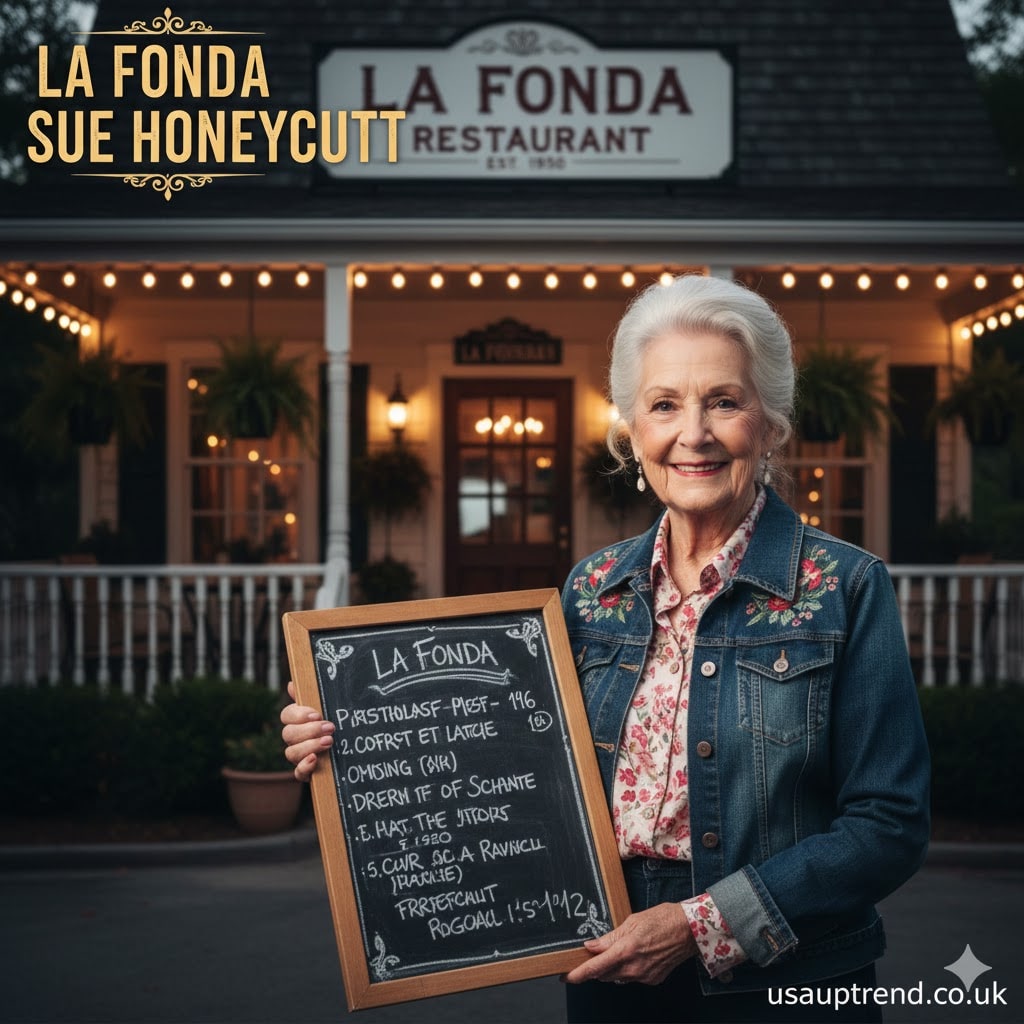
Duane Chapman and La Fonda Sue Honeycutt got married April 1, 1972, in Pampa, Texas. Their cohabiting life had started off on a positive note of hopefulness, but was soon marred with troubles. Duane presented a challenge in securing a steady employment because of his criminal history and La Fonda needed any form of income to take care of their expanding family. In January 1973 she brought their first son. Duane Lee Chapman II and then their second son, Leland Chapman in December 1976.
The marriage was not good even though there was happiness of having children. Infidelity was a recurrent problem in Chapman and brought a lot of heartbreak. In one instance Honeycutt found out about their affair and abandoned him going back to the mother in Texas. She was pregnant and carrying their first child, and when she was persuaded to come back by Duane who promised to change, she did. During some period, they worked on constructing a house to their children.
The Divorce and a Clean Slate
The eventual cracking point was in 1976. Duane, contrary to the demands of La Fonda. Had gone out with his friends and a deal involving the drug was awry, thus killing a man. Even though Chapman did not shoot, he was a driver and later he was charged with first-degree murder. He was found guilty and imprisoned to a prison in Texas serving a sentence of five years.
It was the last stroke that Honeycutt received. Honeycutt had to make a tough choice of moving on when she was presented with the possibility of raising two young sons alone as her husband served a jail term. She divorced in October of 1977 and Chapman was still in prison. She was awarded complete custody of their sons, Duane Lee and Leland.
Since the divorce Honeycutt was again stable and happy. In 1977, she got married to her best friend, Jim Darnell. They created together a peaceful and quiet life and had two daughters; Britney and Hannah. La Fonda opted to leave the mess she had in her past life and bring up her four children in obscurity.
Engagement and Activism in Giving Back
The thing is that La Fonda Sue Honeycutt is one of the people who believe that art must not be limited to the walls of the galleries. She has spent most of her life making art available and participatory, as a form of empowering the community. To her art is a moving power, not the object of admiration.
Her activism is manifested in a number of major endeavors:
- Community Workshops: Honeycutt often works with schools, grassroots groups, and cultural centers to hold art workshops in underserved communities. The sessions provide an opportunity to discover creativity in the participants and to share their stories. Which motivates a feeling of group healing and empowerment.
- Public Art Projects: She has participated in public art projects that aim to make issues of significance visible. Using public spaces to create art, she guarantees that her message will reach a wide audience and will provoke the conversation that otherwise would not have taken place.
- Partnering with Non-Profits: She has been an active partner with the organizations that are on the front line of social and environmental justice. With the help of these collaborations, her art assists in increasing their missions and facilitating their advocacy work.
This dedication to community outreach helps her to have a much greater impact than just her studio and make the society fairer and more equal.
A Tradition of Leadership and Rewards
During her career as an artist, La Fonda Sue Honeycutt has acquired the reputation of the artistic and social organizations. Her shows are not only highly rated aesthetically, but also where their social relevance is remarkable. Although she has obtained awards and honors in her work, she is not lost in her mission. To Honeycutt, success is the real thing behind the discussions her art creates and the lives she touches.
One of the greatest contributions to her legacy perhaps is that of being a mentor. She has always provided platforms to young activists and artists to raise their voices. Her philosophy is based on the fact that creativity is a potent source of individual and social change. She has left a legacy by raising the future generation creators, though this has created a ripple effect. Her vision of art as change maker will be felt years to come. Even her sons by Duane Chapman, Duane Lee II and Leland have entered the limelight by appearing on the reality shows of their father. Today Honeycutt also has four grandchildren Dakota, Cobie, Leiah, and Dylan.
Frequently Asked Questions (FAQs)
Who did Dog the Bounty Hunter, Duane Chapman, marry the first?
The first wife that Duane Chapman had was La Fonda Sue Honeycutt. They were married between 1972 and the year 1977 when they divorced when he was serving a jail term.
What is the number of children belonging to La Fonda Sue Honeycutt?
La Fonda Sue Honeycutt has four children. She is the mother of two sons and two daughters whose father is Duane Chapman-Duane Lee Chapman II and Leland Chapman and two daughters named Britney Lynn Darnell and Hannah Dawn Darnell respectively to her marriage with Duane Chapman and Jim Darnell respectively.
What is La Fonda Sue Honeycutt?
Other than the first wife of Duane Chapman, La Fonda Sue Honeycutt is an artist and an activist. Her novels revolve around issues of culture, social justice and empowering the community.
Whatever happened to La Fonda Sue Honeycutt?
Recently, La Fonda Sue Honeycutt is 72 years of age and leads a personal life with her husband, Jim Darnell, in Texas. She is also loyal to her family and is not in the limelight of the media.
How much is the net worth of La Fonda Sue Honeycutt?
Although she has a low profile life with not much information about her money available to the public. She is estimated to have a net worth of between $500, 000 and 1 million. This is assumed to be as a result of her divorce settlement and a stable family life.
Read more Topics on usauptrend.co.uk